
For children and adults

For lasting change, you need to engage the brain.

Every movement, thought and feeling is organised by the brain, and the brain never stops learning. ABM NeuroMovement creates the conditions in which the brain learns best, whether you are living with cerebral palsy, autism or a brain injury. New movement, new connections and new possibilities can follow. Whether you are here for your child or for yourself, we start with what is already possible and help the brain discover what comes next.

We reply the same day in office hours.
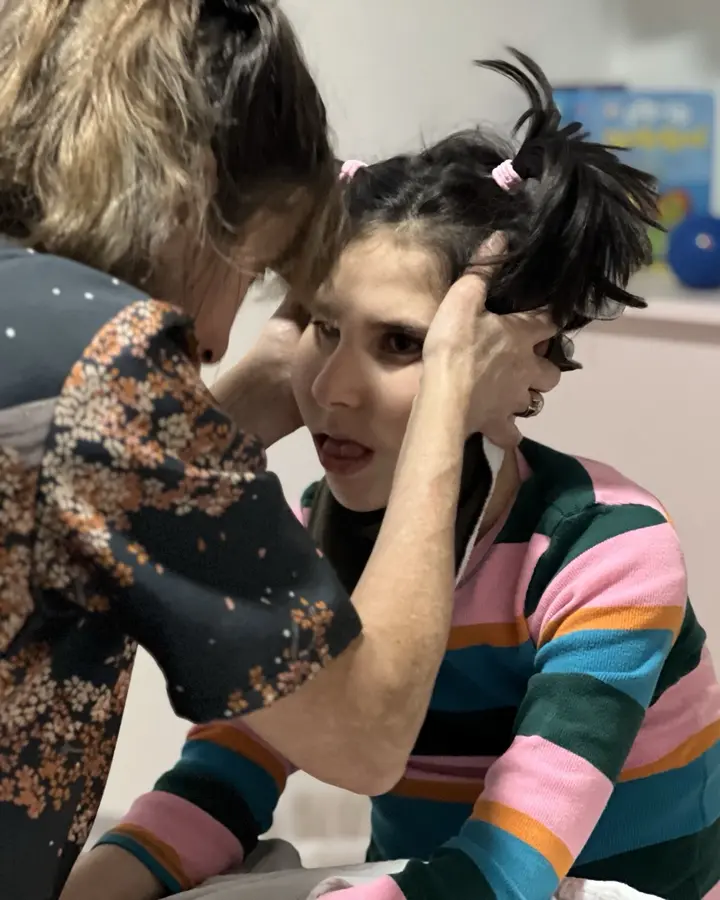
A practitioner gently cradling a girl's head during an ABM NeuroMovement lesson

About us

18 practitioners
13 senior practitioners flown in from the US and Europe, and 5 based in the UK
One to one
Every lesson is just you or your child and the practitioner, for up to 45 minutes. Introductory rate £135
Intensives
Two lessons a day, with a break in between, over three to five days
Five locations
Roehampton is our main centre, where our senior practitioners work. Also Manchester, Coventry, Eltham, Woking and home visits in parts of London.

How it works

Creating the right conditions for the brain to learn

Most approaches set out to fix what is not working. ABM NeuroMovement starts from creating a connection instead. Your practitioner meets you or your child exactly where you are, and builds on what the brain can already do. When the brain feels safe and is given information it can actually use, its capacity to learn and adapt grows.

Picture a torch shone on your back on a busy street in daylight. You would not notice it. Shine the same torch in a calm room at night and you feel it straight away. That is why our practitioners work slowly and with connected touch: it lets the brain notice differences it has been missing. Once it notices a difference, it can learn from it.

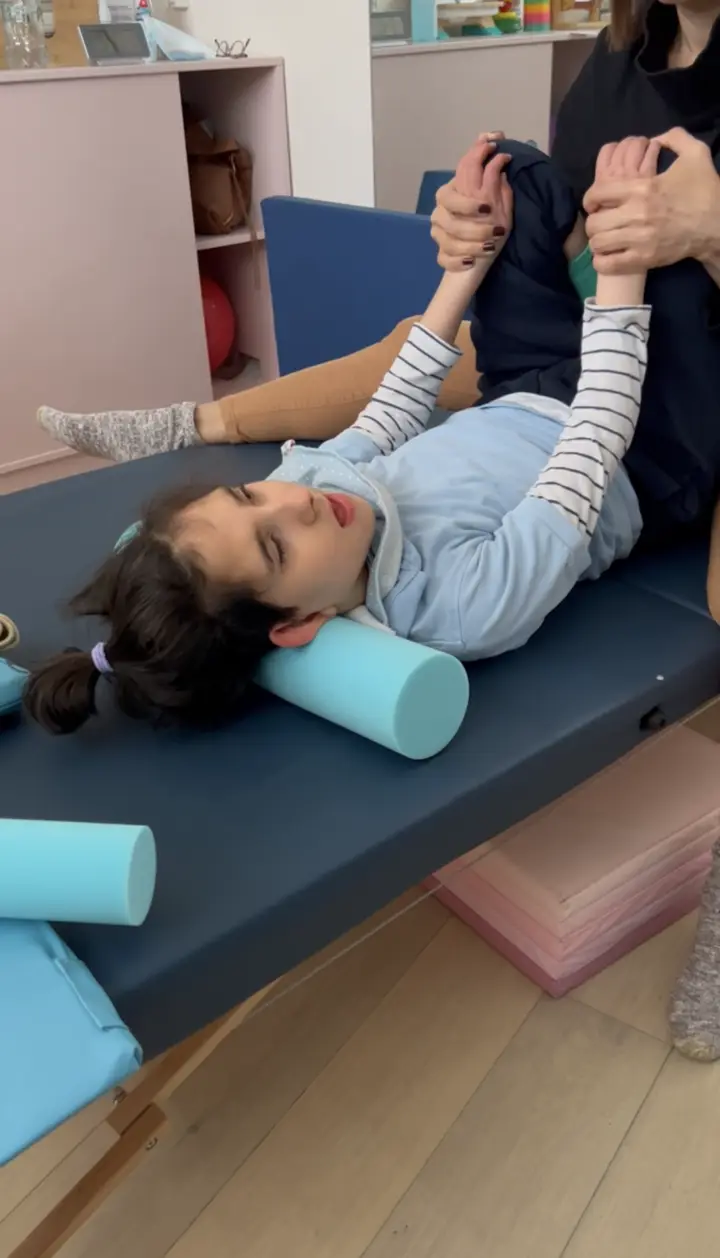
A child lying on a lesson table while a practitioner gently guides her arms
A lesson in our Roehampton centre
“I literally saw my child come to life. She was so alert and aware during and after her first lesson.”
Abi, mother of Annabelle, who has dystonic cerebral palsy

Every lesson is guided by Anat Baniel's 9 Essentials, the conditions in which the brain learns best. Three of them:

Movement with attention

When the brain pays attention to a movement, it forms new connections far faster than when the same movement is done automatically.

Slow

Slowing down lets the brain feel what it is doing. Fast movement runs on old habits. Slow movement gives the brain something new to notice.

Variation

Repetition grooves in what is already there. Variation, the same movement explored in many small ways, is what lets the brain find something new.

Working alongside other therapies

Many families also have other therapies in place. During an intensive we usually recommend pausing other therapies for a short time, so you can see clearly what is making the difference. Anything medical, and anything your medical team has prescribed, should always continue.

Who we work with

There is often more potential than anyone has been told

Most people who contact us have already tried a lot. A parent may be six therapies in. An adult may have done two years of rehab after a stroke. What they share is a sense that there is more in there than anyone has yet found a way to reach. We think so too, and that is where our work begins.

Cerebral palsy

Engaging the brain for comfort, ease and new movement

Through connected touch and small, varied movements, we help the brain notice new possibilities and organise movement across the whole body with more ease. Comfort is often the first thing to change. The person feels it themselves, and those around them see it in how they rest, sleep and engage, and then in how they move. Where stretching and strengthening target the muscles, we work with the brain that organises them. That is true at any age, from babies to adults.
Stroke and brain injury

Rehab that looks at the whole person, not just what was lost

Most rehab focuses on the arm, leg or skill that is not working. We look at how the brain is organising the whole body around it: the ribs, the pelvis, the breath, the unaffected side. When the brain gets a clearer picture of the whole, it can find better solutions of its own. What we typically see is a steady return of control, balance and ease, sometimes in movements that were never directly worked on. The brain keeps its capacity to learn long after formal rehab ends.

Autism, ADHD, learning differences

Calmer, more settled, more connected

Many autistic children are less comfortable in their bodies than they appear. 87% of children who meet the criteria for autism have significant movement challenges, and the more severe those challenges, the more severe the autism symptoms. By working with movement and attention, we help the nervous system settle. What families typically notice first is better sleep, fewer or shorter meltdowns, longer focus and more interest in other people. Communication, with and without words, grows from there.

Source: Bhat (2021), cited in Baniel et al., Frontiers in Integrative Neuroscience (2025)

Genetic and structural conditions

Every brain can keep learning

Rare syndromes, chromosomal differences, scoliosis, torticollis, brachial plexus injury. A diagnosis describes a condition. It does not set a limit on what the brain can learn. We meet the person where they are and look for what is already working, then build from there.

Not sure whether this is right for you or your child? Tell us a little about your situation and we will give you an honest answer.

Our practitioners

Some of the most experienced practitioners in the world

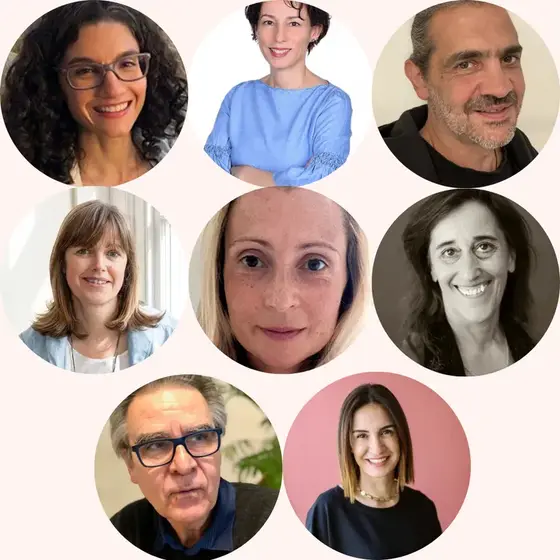
We fly in 13 senior ABM NeuroMovement practitioners from the US and Europe, many with decades of experience with children and adults. Each has their own way of sensing and feeling movement, and that variety gives the brain more to learn from. Our 5 UK practitioners are highly skilled in their own right, and many families work with them week to week, close to home.

Portraits of some of our practitioners

Our senior practitioners visit for set periods through the year. Ask us about upcoming dates.

What happens next

Three steps to getting started

  1. Tell us about you

    The form takes about three minutes. It helps us prepare, so your call is about you rather than general questions.

  2. A call with us

    Around 20 minutes. We talk through what you have tried and what you are hoping for, and share fees and availability. If we do not think we can help, we will say so.

  3. Your first intensive

    Most families start with an intensive of 6 to 10 one to one lessons of up to 45 minutes: two a day, with a break in between, over three to five days. Your first intensive is at our introductory rate of £135 a lesson, so 6 lessons come to £810. Our standard rate is £145 a lesson.

    This is a process rather than a quick fix. The brain builds on what it learns, so families who continue month by month, usually over three months or more, tend to see the deepest change.

Next intensives in Roehampton

Upcoming dates with places available

Each intensive runs Wednesday to Sunday, with two one to one lessons a day. Places are limited, so families usually book a few weeks ahead.

Who are the lessons for?
How would you like to have lessons?
Lessons are privately funded. Is that something you can plan for?
This work builds over time, and most families see the most value over three months or more. How do you feel about that?

Common questions

Before you get in touch

Is there research behind this?

Yes. A peer reviewed paper in Frontiers in Integrative Neuroscience (2025) sets out how ABM NeuroMovement works with autistic children. Its authors include Anat Baniel and paediatric neurologist and autism researcher Dr Martha Herbert. It also cites the research showing that 87% of autistic children have significant movement challenges. Neuroplasticity pioneer Dr Michael Merzenich and Dr Norman Doidge, author of The Brain That Changes Itself, have both spoken about the method. Read the paper.

Do we have to stop other therapies?

During an intensive we usually recommend a short pause, so you can see clearly what is helping. Anything medical should always continue. We will talk through how the pieces fit together for you.

How soon will we see change?

Many people notice a felt difference within their first few lessons: more ease, more calm, more alertness. Across an intensive, changes tend to consolidate. This is a learning process, so the most meaningful change comes over blocks of lessons. We cannot promise specific outcomes, and we will be straight with you about what we see.

My child is autistic. Will they start to speak?

Some children develop speech through this work. Others develop clearer ways of communicating without words. Some may never speak. What we typically see first is change in sleep, regulation and engagement, and those changes matter in their own right.

Where are lessons held?

Our main centre is at 18 Roehampton High Street, London SW15 4HJ, with lessons also in Manchester, Coventry, Eltham and Woking. Home visits are possible in some parts of London, and online coaching is available for parents and carers.